Support & Email
Customer Support
Our Location
7765 Pecue Lane, Baton Rouge, LA 70809
7765 Pecue Lane, Baton Rouge, LA 70809
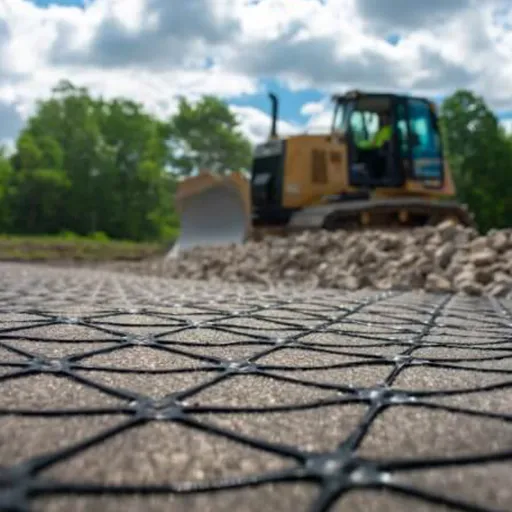
Railway operators across North America spend billions of dollars annually on track maintenance, with ballast degradation and subgrade-related geometry failures accounting for the majority of maintenance expenditures on established track. The cycle is frustratingly familiar: fine-grained subgrade material pumps up into the ballast under dynamic wheel loads, fouling the aggregate and degrading drainage capacity, leading to track geometry deterioration, speed restrictions, and costly maintenance windows. Industrial Fabrics Inc.'s TrackTex� anti-pumping geocomposite was specifically engineered to break this cycle � and the results on deployed track sections speak for themselves.
Clean, angular ballast provides the drainage capacity and load-bearing stability that modern track requires. As ballast fouling progresses � whether from subgrade clay migration, ballast breakdown, or surface contamination � the void ratio decreases, drainage deteriorates, and the load-distributing capacity of the trackbed is compromised. Fouled ballast cannot adequately dissipate dynamic wheel loads, leading to accelerated settlement, track alignment loss, and ultimately the speed restrictions and emergency maintenance that cost railway operators so dearly.
The fouling process is particularly aggressive on sections with fine-grained or moisture-sensitive subgrades. Under repeated dynamic loading, pore water pressure cycles in the subgrade can liquefy surface fines and literally pump them upward into the ballast. A single severe pumping event can foul a ballast layer that took years to compact to optimal condition � and the same fines will simply pump up again if the contaminated ballast is cleaned without addressing the subgrade interface.
TrackTex� is a composite geosynthetic structure purpose-designed for placement at the ballast-subgrade interface. It consists of two functional layers working in combination:
The drainage core is a three-dimensional polymeric structure � similar in concept to a geocomposite drain, but engineered specifically for the demanding dynamic loading environment of rail trackbeds. The core maintains its flow capacity under the high compressive stresses imposed by ballast and traffic loads, providing a continuous lateral drainage path for water that would otherwise be trapped in the subgrade. By keeping the subgrade drier, TrackTex� dramatically reduces the pore pressure buildup that drives pumping.
On both faces of the drainage core, needlepunched non-woven geotextile layers serve as particle retention filters. The upper filter prevents ballast fines from migrating down into the drainage core; the lower filter prevents subgrade fines from migrating upward into the ballast. The filtration specifications � opening size, permeability, and soil retention criteria � are calibrated for compatibility with a range of subgrade soil types from clean sands through plastic clays.
While TrackTex� benefits virtually any problematic track section, the ROI is highest in the following conditions:
A common concern with geosynthetic trackbed solutions is installation complexity and track possession time. TrackTex� is specifically designed for efficient installation within standard maintenance windows:
Industrial Fabrics Inc. provides detailed installation specifications, on-site technical support, and post-installation inspection services for all TrackTex� projects. Our railway engineering team has supported installations on Class I freight railroads, commuter rail systems, and transit authorities across North America.
Many railway maintenance planners first encounter TrackTex� as a reactive treatment for chronic problem spots. The economics are compelling even in this context � material and installation cost is typically recovered within two maintenance cycles avoided. But the stronger business case is proactive deployment during major capital projects: new construction, major rehabilitation, or bridge replacement. Installing TrackTex� during planned maintenance possessions adds minimal cost and eliminates the need for reactive maintenance on the treated sections for the design service life of 25+ years.
To discuss your specific track conditions, request a design consultation, or obtain TrackTex� material specifications and pricing, contact our railway solutions team at info@ind-fab.com or call +1 (800) 848-4500.