
Support & Email
Customer Support
Our Location
7765 Pecue Lane, Baton Rouge, LA 70809
7765 Pecue Lane, Baton Rouge, LA 70809
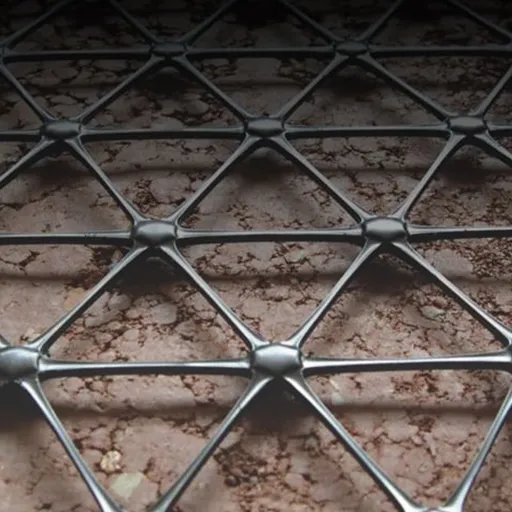
Pavement engineers across North America are facing a persistent challenge: how to build roads and surfaces that last longer, cost less, and perform reliably under increasingly heavy traffic loads. The answer, increasingly, lies beneath the surface � in the form of high-performance geogrid technology. At Industrial Fabrics Inc., our BaseLok� geogrid systems are at the forefront of this transformation, helping contractors reduce aggregate thickness, lower material costs, and dramatically extend pavement service life.
A geogrid is a polymer mesh structure � typically made from high-tenacity polyester or polypropylene � that is placed within the aggregate base or subgrade layer of a road or surface structure. Unlike traditional geotextiles, geogrids are designed primarily for mechanical reinforcement rather than filtration or separation.
The key mechanism is interlocking confinement: aggregate particles penetrate through the geogrid apertures and lock into position, creating a composite structure far stiffer than aggregate alone. This confinement effect distributes vertical loads across a much wider area, reducing stress concentrations at the subgrade level and preventing rutting and premature failure.
Industrial Fabrics Inc. engineered the BaseLok� geogrid range specifically for the demanding conditions found in North American road construction � extreme temperature swings, heavy axle loads from freight transport, and subgrades that range from expansive clays to moisture-sensitive silts.
While geogrids benefit virtually any aggregate-supported surface, the performance gains are greatest in specific site conditions:
On sites where native soils have low California Bearing Ratio values � saturated clays, organic soils, or loosely compacted fills � a geogrid layer at the base/subgrade interface provides the bridging and confinement needed to achieve adequate compaction and prevent base pumping. In these conditions, aggregate thickness reductions of 50% or more have been documented in monitored projects.
Mining haul roads, port terminals, container yards, and crane pads subject the aggregate base to intense, repetitive point loads that quickly degrade unreinforced sections. BaseLok� geogrid reinforcement substantially extends the maintenance cycle and reduces rutting depth, translating directly into reduced operational downtime.
For forest roads, farm access tracks, and rural roads where a paved surface is not economical, geogrid-reinforced gravel provides a cost-effective all-weather surface. The geogrid maintains aggregate interlock under wet conditions when unstabilized aggregate would otherwise track out or rut severely.
When combined with asphalt overlay work, paving interlayer geogrids reduce reflective cracking propagation through the overlay, extending the service life of the new pavement surface by three to five years compared to unreinforced overlay sections in typical service conditions.
A common misconception is that geosynthetic reinforcement adds cost to a project. In practice, the material cost of the geogrid is typically offset � and often exceeded � by the value of aggregate saved. Consider a scenario where geogrid reinforcement reduces base aggregate requirement from 18 inches to 11 inches across a 2-mile, 24-foot-wide road section:
This calculation does not account for reduced trucking cycles, lower fuel consumption, shorter project duration, or the extended service life that reduces future rehabilitation costs.
Proper installation is critical to achieving design performance. The Industrial Fabrics technical team recommends:
Beyond the immediate project economics, geogrid reinforcement supports broader sustainability goals. Using less aggregate means fewer quarry operations, less truck traffic, lower carbon emissions from material production and transport, and less disturbance to surrounding environments. As infrastructure agencies and contractors face increasing pressure to reduce the environmental footprint of construction, geosynthetic solutions like BaseLok� geogrids offer a tangible, measurable path to greener project delivery.
Industrial Fabrics Inc. is committed to continued product development in this space. Our engineering team actively collaborates with state DOTs, university research programs, and international standards bodies to refine design methodologies and expand the application envelope of geogrid technology.
For project-specific technical support, aggregate thickness design assistance, or to request a BaseLok� product sample, contact our engineering team at info@ind-fab.com or call +1 (800) 848-4500.