Support & Email
Customer Support
Our Location
7765 Pecue Lane, Baton Rouge, LA 70809
7765 Pecue Lane, Baton Rouge, LA 70809
Geogrid Retaining Walls
Sites with grade separation requirements present a number of challenges with an even greater number of potential solutions. Confined construction footprints, limited access, seismic and settlement activity, environmental restrictions, and more - all pose significant design, construction, and budgetary demands on owners, developers, engineers, and contractors. Conventional solutions including cast-in-place concrete walls and sunken pilings can be costly, difficult to stage, time-consuming, and labor-intensive.
IFI provides engineered geosynthetic solutions for this application, backed by on-staff engineers and full technical support from design to installation.
IFI provides engineered geosynthetic solutions for this application, backed by on-staff engineers and full technical support from design to installation.
Geogrid retaining walls are ideal for projects requiring increased height, load-bearing capacity, or resistance to settlement and lateral movement. Here are a few scenarios where they outperform conventional models (and increase savings):
The design and construction of a geogrid retaining wall depend on several factors, including wall height, load requirements, and soil properties. Key considerations include:
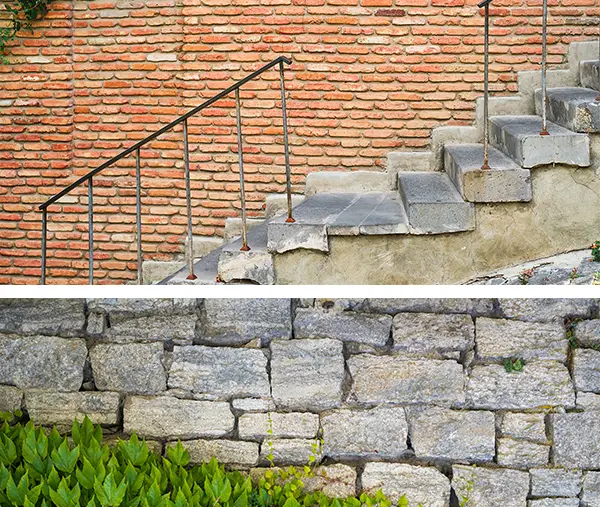
Retaining walls built on soft soils risk post-construction settlement issues, including deformation at the wall face. Conventional solutions for constructing over areas of excessive total or differential settlement may first require excavation and replacement of settlement-prone soils, deep pile foundations or temporary surcharge embankments. However, each of these methods is time-consuming and can be extremely expensive.
By contrast, two-stage wall construction saves time and expense to meet both structural and aesthetic objectives. In the first stage, the retention structure is built, allowing foundation settlement to occur. The second stage adds a permanent aesthetic wall facing.
Two-stage construction wall system combines a flexible, settlement-tolerant, mechanically stabilized earth (MSE) retaining wall structure with a permanent facing element. Following installation of the MSE structure, facing options include precast ARES modular or full height panels, Mesa® segmental retaining wall (SRW) units or cast-in-place concrete.
Know MoreBridge abutments are among the most demanding grade separation applications. Differential settlement, traffic loads and seismic events continually test their structural integrity and long-term performance. Furthermore, construction components are subjected to chemical corrosion, hydrolysis, and more.
Know MoreTraditional pressure relief walls, including cast-in-place concrete and counterfort walls, are costly and can be difficult to stage and install. Structurally equivalent to conventional solutions, IndFab's SierraScape retaining wall system offers an effective yet lower cost alternative. The SierraScape system is also an ideal alternative to the demolition and replacement of existing structures and can accommodate increased loads at expansion facilities.
Know MoreStormwater issues present ongoing challenges to engineers, owner/developers, contractors and governing authorities. While meeting stormwater quality standards is a mandate, maximizing land use remains a top priority. Detention ponds and extended storage ponds provide effective solutions to national, state and local requirements for stormwater runoff control and management.
While conventional approaches can be used, three of IndFab's MSE systems offer innovative, cost-effective solutions to increase storage volume while minimizing the impact on usable land: Mesa retaining wall system, SierraScape retaining wall system, and Sierra® Slope retention system. Each can be specified to steepen the interior sides of a pond or the external sides of a berm. More economical and attractive than conventional concrete structures, our solutions add aesthetic and environmental value.
Know MoreTemporary walls are required for many types of staged construction, and pile systems have been the preferred choice for many years. But these systems are expensive, requiring heavy lifting and pile-driving equipment as well as skilled labor for installation.
IndFab's temporary retaining wall system is a proven technology that allows you to build temporary walls without the challenges and expense of conventional techniques. With an economical wire-form facing system, lightweight installation equipment and use of unskilled labor, IndFab temporary walls provide a durable, low-cost alternative to sheet pile walls. These retaining walls are ideal for traffic maintenance, staged construction, and similar projects.
Know More
Aenean mattis mauris turpis, quis porta magna aliquam eu. Nulla consectetur.

IFI provides engineered geosynthetic solutions for this application, backed by on-staff engineers and full technical support from design to installation.

IFI provides engineered geosynthetic solutions for this application, backed by on-staff engineers and full technical support from design to installation.

Aenean mattis mauris turpis, quis porta magna aliquam eu. Nulla consectetur.

Degradation-resistant solution carries high tensile loads applied in one direction
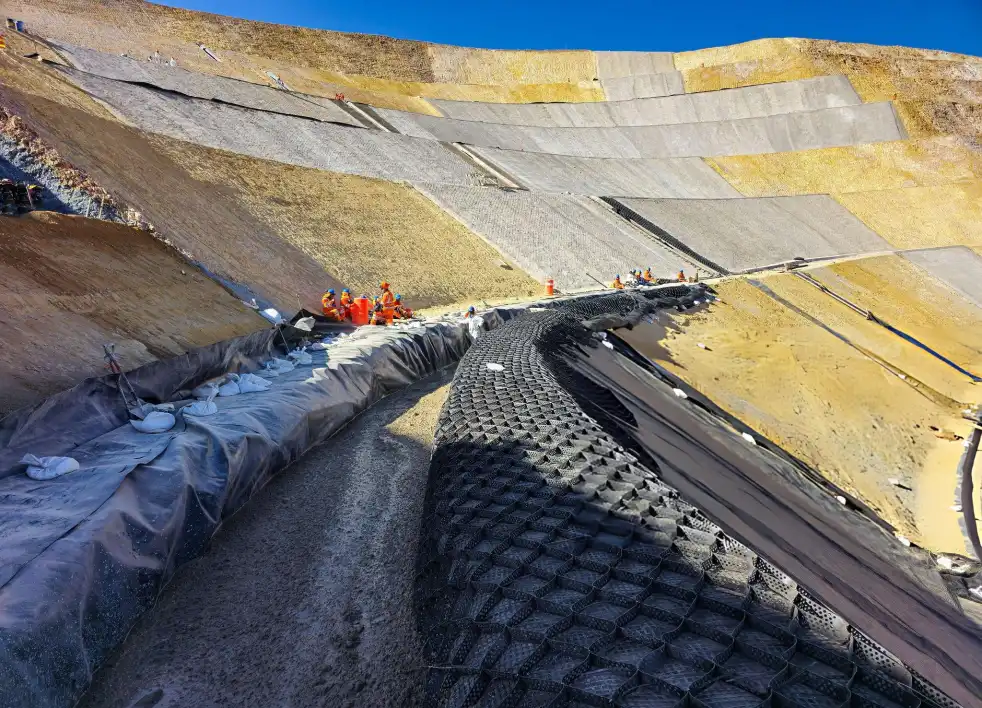
Single-source segmental retaining wall with proven performance

Modular and full-height panel walls with choice of textures and patterns
Single-source welded wire face solution with multiple facing options
Natural aesthetic appeal coupled with significantly reduced material and installation costs
Simplify planning with walls that can be left in places or removed as needed
Explore technical resources, case studies, and industry insights to help you make informed decisions for your geosynthetic retaining wall projects.


Looking for a customized solution for your next project? Our team of experts is ready to support you with design consultation, technical assistance, and product guidance.